
- The Real Manual Data Entry Costs Every Business Owner Should Know
- Why Manual Data Entry Costs More Today Than 10 Years Ago
- The Real Manual Data Entry Costs Go Beyond Money
- Why “We Have Always Done It This Way” Does Not Work Anymore
- The 1-10-100 Rule (Why Fixing Problems Later Costs More)
- What Actually Works: Real Solutions from Real Businesses
- Real Results from Real American Businesses
- Why This Matters Right Now
- Take Action Today
Manual Data Entry Costs Businesses Thousands Every Year – Stop Copy-Paste


Manual data entry costs businesses thousands of dollars every year, even though most owners don’t realize it at first.
Let me tell you about Sarah, one of my friends from Austin, Texas. She is a business owner and runs a boutique marketing agency with five employees.
Every morning when Sarah arrives at her office she and her team spends their first hour doing the same thing.
Copying client information from emails to her project management spreadsheet. Contact details from inquiry forms. Campaign results from various platforms. And at last invoice information for her accounting systems.
Sarah was aware that this 1 hour is not the best use of the time. After all, she is the business owner.
Instead of this she should be talking to clients, planning strategies and growing the business.
But someone had to take the responsibility to organize this data, right? But her team is already busy with client work.
But what Sarah was not aware of was that this repetitive daily routine is costing her business nearly $75,000 every year. Yes, you read that correctly. Seriously seventy-five thousand dollars.
At GSheetConnector, we have seen this type of same story play out hundreds of times across businesses in the United States and the world.
And that is why we are here to tell you something important: there is a better way, and it costs a fraction of what you are losing right now.
The Real Manual Data Entry Costs Every Business Owner Should Know
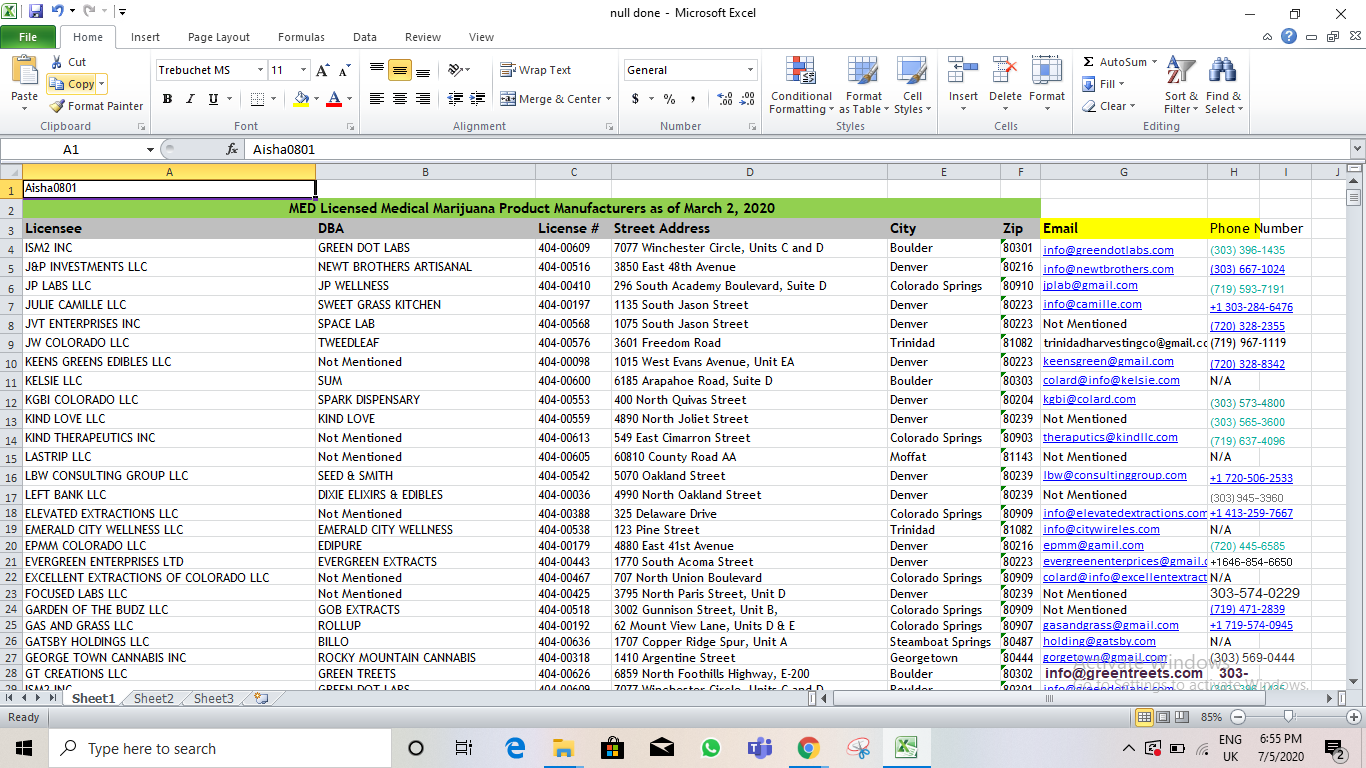
According to in depth research conducted by several sources across American businesses in 2025, manual data entry is costing around an average of $28,500 per employee every single year.
This is not a made up number to scare you. This number has come from analyzing thousands of real businesses across America.
Let us break down what this means for a small business like Sarah's marketing agency:
- 5 employees spending an average of 9 hours per week on manual data entry
- That equals 45 hours per week across the whole team
- At an average rate of $25 per hour (quite conservative for marketing professionals)
- Weekly cost: $1,125
- Annual cost: $58,500
And this is just the direct labor cost. We have not even mentioned the mistakes, the missed opportunities, the frustrated employees, or the lost customers yet.
This is how manual data entry costs quietly grow over time without being noticed.
Why Manual Data Entry Costs More Today Than 10 Years Ago
Here is a interesting fact, manual data entry is inefficient and was always inefficient. But as time is passing it is becoming more expensive and more damaging to businesses now than it was before. Do you know why?
Customer Expectations Have Changed:
Ten to twelve years ago, if a customer filled out your contact form and you responded to them within 24 hours, that was considered good service.
But in today's world customer service has become so fast that if you do not respond to them within the first 3 hours then be sure that your competitor has already contacted that client. Research shows that if a lead is answered within the first 5 minutes then it has more chances of converting that to the one contacted after 30 minutes.
So when your contact form data sits in your email inbox waiting for someone to manually copy into your CRM, then you are quietly sitting and watching your potential customer slip away to faster competitors.
The Cost of Mistakes Has Increased:
A typing mistake in a customer’s email address 10 years ago was meant as a lost follow up.
But in today’s world, with automated email sequences, CRM integrations, and targeted advertising, one small mistake breaks the entire marketing funnel for that particular customer. In simple terms we can say that the cost of each error has multiplied.
Employee Expectations Have Evolved:
Today’s workforce, especially in the USA, expects to use their skills and creativity at work. But over 56% of employees report feeling burned out from repetitive manual tasks.
This is not just about “lazy” or “entitled”. Instead this is about talented people leaving your company because they are just bored out of their minds doing copying and pasting information all day.
The Real Manual Data Entry Costs Go Beyond Money
Let’s return for a moment to Sarah and her marketing agency. Once we showed her the numbers, she began to measure exactly what it cost her business in manual data entry. What she discovered was eye-opening.
The Time Cost (The One Everyone Sees)
Sarah and her team were working 45 hours a week on data entry. That is more than the equivalent of one full-time employee’s worth of work. She did some math:
If she could recover all 45 of those hours each week, her team would:
- Reach out to an additional potential clients every week
- Create 15 extra pieces of content for current clients
- Properly follow up with past clients to generate referral business
- Actually take lunch breaks and go home on time (imagine that!)
The opportunity cost was shocking. How many new clients were they not getting just because they were too busy in copying data from one place to another?
The Error Cost (The Hidden Budget Killer)
One day, one of Sarah’s staff accidentally emailed a client campaign report to an incorrect email address. It was a simple typo: “. con” instead of “. com”. The computerized system sent the report to the wrong address for three weeks before it was ever noticed.
When they finally discovered the mistake:
- The client was angry (thinking they were being ignored)
- Sarah's team spent around 6 hours fixing the problem and rebuilding the client relationship
- They had to offer a discount to keep the client from leaving
- The total cost: approximately $2,500 in lost revenue and recovery efforts
Research shows that data entry done by humans manually achieves only 96-99% accuracy, which means mistakes happen even with careful, experienced people.
And as Sarah learned, each mistake can cost anywhere from $50 to $150 to fix, depending on how far it travels through your systems before someone catches it.
The Employee Cost (The One That Hurts Long-Term)
Six months after we first met Sarah, one of her most valuable employees quit. During one of these exit interviews, the departing employee told Sarah something that resonated with her: “I didn't go to school for marketing to copy and paste shit all day. I want to get into some real marketing.”
That resignation cost Sarah approximately $35,000 when you factor in:
- Recruiting costs for finding a replacement
- Training time for the new person
- Lost productivity during the transition
- Knowledge that walked out the door
The cost of replacing an employee averages 50-200% of their annual salary and from one in every two workers mentions manual data entry as a leading cause for job dissatisfaction.
The Customer Cost (The One That Kills Your Growth)
Here is the price Sarah never realized she was paying until we showed her: losing customers because she couldn’t respond quickly enough.
Sarah’s contact form forwarded messages to her email. Then, someone had to manually enter that data into their CRM. Then someone else had to assign it to the appropriate team member. The potential client would then not get a call until 8-12 hours later.
Like in the marketing services business, with many competitors and customers who are looking around, that 8-12 hours were an eternity, which meant lots of potential clients already had hired somebody else.
After tracking for a month, Sarah believed she was losing about 3 – 4 potential clients per month all because her response time was too slow. With the average project at around $5k, that was $15k-$20k of lost monthly revenue. That’s $180,000 to $240,000 over a year.
Why “We Have Always Done It This Way” Does Not Work Anymore
We hear this phrase a lot at GSheetConnector: “But we have always done it this way, and it always works fine.”
Here is what we have learned: It was working fine before but as time passed and technology upgraded, your competitors also upgraded themself.
So when one client fills your form and another competitor's form at same time and he responds in the first 30 minutes while you are still manually copying data and contacting 6 hours later, your “fine” method has actually cost your business.
According to recent industry data, around 46.2 of businesses have still not adopted automation tools yet. But here the rest 53.8% who have already adopted automation are eating everyone else’s lunch. Because they are faster, affordable, more accurate and less stressed.
And due to less repetitive tasks their employees are happier because they are doing more meaningful work instead of copy-paste tasks.
Industry experts are predicting that by 2030 manual data entry tasks will largely disappear from competitive industries.
Here the question is not that you will automate your business in future, here the question is how much money you will lose between that meantime.
The 1-10-100 Rule (Why Fixing Problems Later Costs More)
When it comes to costs related to ensuring data quality, business experts adhere to something called the “1-10-100 rule.” And this rule has held true for thousands of companies:
- It costs $1 to prevent a data entry mistake (through automation)
- It costs $10 to fix a mistake after it happens
- It costs $100 (or more) if the mistake causes bigger problems like lost customers or strategic errors
Let us see this in action with a real example from a business we worked with in California:
The $1 Prevention Cost:
A small e-commerce store which was entering order entries manually into the inventory system could have automated it. Cost for this was approximately $150 per year for the automation tool
The $10 Fix Cost:
As they were manually entering orders and made an average of 8 data entry mistakes per week. Each mistake was taking approx 20 minutes to investigate and solve it. Cost: about $15 per fix × 8 per week × 48 weeks = $5,760 per year.
The $100 Consequence Cost:
And due to one of these mistakes resulted in overselling a product. As they accepted 0 units when they only had 15 of them in stocks. They had to:
- Cancel 35 orders (angry customers)
- Issue refunds
- Deal with negative reviews
- Offer discounts to unhappy customers to salvage some relationships
- Total cost of that ONE mistake: approximately $8,500
They could have prevented all of this for just $150 per year. Instead, it cost them around $14,000 in one year because of manual data entry problems.
What Actually Works: Real Solutions from Real Businesses
Okay, we had talked enough about the problems. Now let us talk about solutions that can actually work for real businesses in the United States.
Solution 1: Start With Your Biggest Pain Point
You do not have to automate everything at once. In fact, we never recommend you to do this. We suggest starting with one manual data entry task that causes the most pain.
For Sarah's marketing agency, it was contact form submission. Because whenever a new inquiry comes it has to be manually copied into three different places: their CRM, their project tracking sheet, and their follow-up calendar. This was taking 45-60 minutes per day.
They started with that. Just one task. And within a week, they had automated it completely using GSheetConnector. Now whenever someone was filling out their contact form:
- Information automatically appears in their Google Sheet (CRM)
- Automatic notification goes to the right team member
- Follow-up task automatically creates in their system
That one change saved them 5+ hours per week.
Solution 2: Calculate Your Actual Costs
Before you invest in any solution, know how much manual data entry is genuinely costing you. Use this simple formula:
Annual Cost = (Hours per week on manual data entry) × (Average hourly rate) × 48 weeks
For example:
- Your team spends 12 hours per week on manual data entry
- Average hourly rate: $22
- Calculation: 12 × $22 × 48 = $12,672 per year
Now compare that to the cost of automation. So if automation costs $200 per year, you’re saving yourself $12,472 every single year. The investment return is clear enough.
Solution 3: Choose Simple, Reliable Tools
At GSheetConnector, we created a tool designed exclusively for WordPress businesses who are looking for the most straightforward automation available. We have engaged hundreds of American businesses, and here’s what we’ve learned they want:
Easy Setup (Not “Easy for Developers,” Actually Easy):
Our customers usually have their initial automation process running in less than 15 minutes. No coding. No technical knowledge needed. If you are familiar with WordPress and Google Sheets, then you already know how to use GSheetConnector.
Reliable Operation (It Just Works):
One of our Seattle clients said to me: “I set it up two years ago and forgot about it really. I looked, and it has taken literally every form submission for 24 months. 100% reliability.”
Affordable Pricing (Saves More Than It Costs):
Our solution is available from $49 per year for the small single-site. Once you compare that to losing $12,000 every year on manual data entry, the choice is easy.
Solution 4: The 80/20 Approach
You don’t have to completely systematize in order to see huge returns. Concentrate on automating the 20% of what you do that consumes 80% of your time.
Typical high-impact automations for US businesses:
- Contact form submissions to Google Sheets – Saves 5-10 hours per week for most businesses
- E-commerce orders to inventory tracking – Eliminates 90% of stock management errors
- Customer inquiries to response tracking – Cuts response time from hours to minutes
- Lead information to sales pipeline – Ensures no lead ever falls through the cracks
Real Results from Real American Businesses
Let us look at actual results from businesses we have helped:
Marketing Agency in Austin, Texas (Sarah's Story):
- Was spending: 45 hours per week on manual data entry
- Annual cost: $58,500
- After automation: Saved 42 hours per week (kept 3 hours for strategic data review)
- Annual savings: $54,600
- Used saved time to: Contact more prospects, closed 8 additional clients in first year
- Additional revenue from those clients: $94,000
- Total impact: $148,600 improvement in first year
- Cost of automation: $99
- ROI: 1,500%
E-commerce Store in Miami, Florida:
- Was spending: 2 hours daily copying orders to inventory sheets
- Annual cost: $19,500 (at $25/hour)
- Manual data entry error rate: 3-4% causing stock issues
- After automation: Orders flow automatically to Google Sheets
- Annual savings: $19,500
- Bonus benefit: Error rate dropped to near 0%, customer satisfaction increased 35%
- Grew business by 40% in one year because they had time to focus on marketing instead of data entry
Consulting Firm in Boston, Massachusetts:
- Was spending: 12 hours weekly entering client data across multiple systems
- Employee burnout was high, considering hiring additional admin staff ($45,000/year)
- After automation: Eliminated 10 hours of weekly manual work
- Did not need to hire additional staff (saved $45,000)
- Existing employees much happier, no turnover in 18 months since automation
- Senior consultant told us: “I can finally focus on actual consulting instead of being a data entry clerk”
Why This Matters Right Now
The real world of business doesn’t stop. Instead it is speeding up. Customer expectations are increasing. Precisely because competition in every field is getting harder.
The space continues to grow every single month between those companies that automate, and those that still have manual data entry.
We’ve seen this story again and again: companies which have automated earlier get a compounding competitive advantage over time. They respond faster to their customers. They make fewer mistakes. They scale faster, because their team is spending time in growing the business instead of typing in data. Their staff members are happier, and they stay longer.
Meanwhile, the businesses that continue relying on manual processes fall further and further behind, wasting more money, infuriating more employees and missing out on countless sales opportunities.
Take Action Today
If you’re running a WordPress site and still somehow copying data from contact forms, e-commerce orders of customer requests manually then you’re leaving money on the table every single day.
That’s why we created GSheetConnector in the simplest manner possible to address this problem. No complicated setup. No more monthly subscription fees that accumulate over time. No technical expertise required.
What You Can Automate Right Now:
- Contact Forms: Contact Form 7, WPForms, Gravity Forms, Elementor Forms, Ninja Forms, Formidable Forms, and more
- E-commerce: WooCommerce orders, Easy Digital Downloads
- Custom Forms: Any WordPress form you are using
- Multiple Sites: Perfect for agencies managing client websites
Getting Started is Simple:
- Install GSheetConnector from WordPress plugin directory (takes 2 minutes)
- Connect to your Google account (takes 1 minute)
- Choose which forms to automate (takes 5 minutes)
- Done. Data flows automatically from now on
Be part of the hundreds of American companies who have already removed manual data entry and saved tens thousands dollars annually.
Now it’s not the question of whether manual data entry is costing your business money. The research proves it is. The only question is: What will it take for you to fix this?