
Table of Contents
- How Many Websites Use WooCommerce in 2025?
- What Percentage of Online Stores Use WooCommerce?
- WooCommerce Market Share Compared to Other Platforms
- WooCommerce’s Dominance Inside WordPress
- How Many WooCommerce Themes Are Available?
- How Many WooCommerce Plugins Exist?
- How Fast Is WooCommerce Growing?
- What to Expect from WooCommerce in 2026
- WooCommerce Statistics FAQ
- WooCommerce Statistics Infographic Outline
- Related Resources for WooCommerce Store Owners
- Final Thoughts
WooCommerce Statistics 2025: Usage, Market Share & What to Expect in 2026


WooCommerce remains one of the most widely used eCommerce platforms globally. As of December 17, 2025, it continues to power millions of online stores across industries, regions, and business sizes.
However, WooCommerce statistics are often misunderstood. Different platforms track usage in different ways, which leads to confusion around installation counts, live websites, and market share.
This article presents the most accurate and conservative WooCommerce statistics for 2025, explains why numbers differ across sources, and looks ahead to what store owners can expect in 2026.
How Many Websites Use WooCommerce in 2025?
Short answer
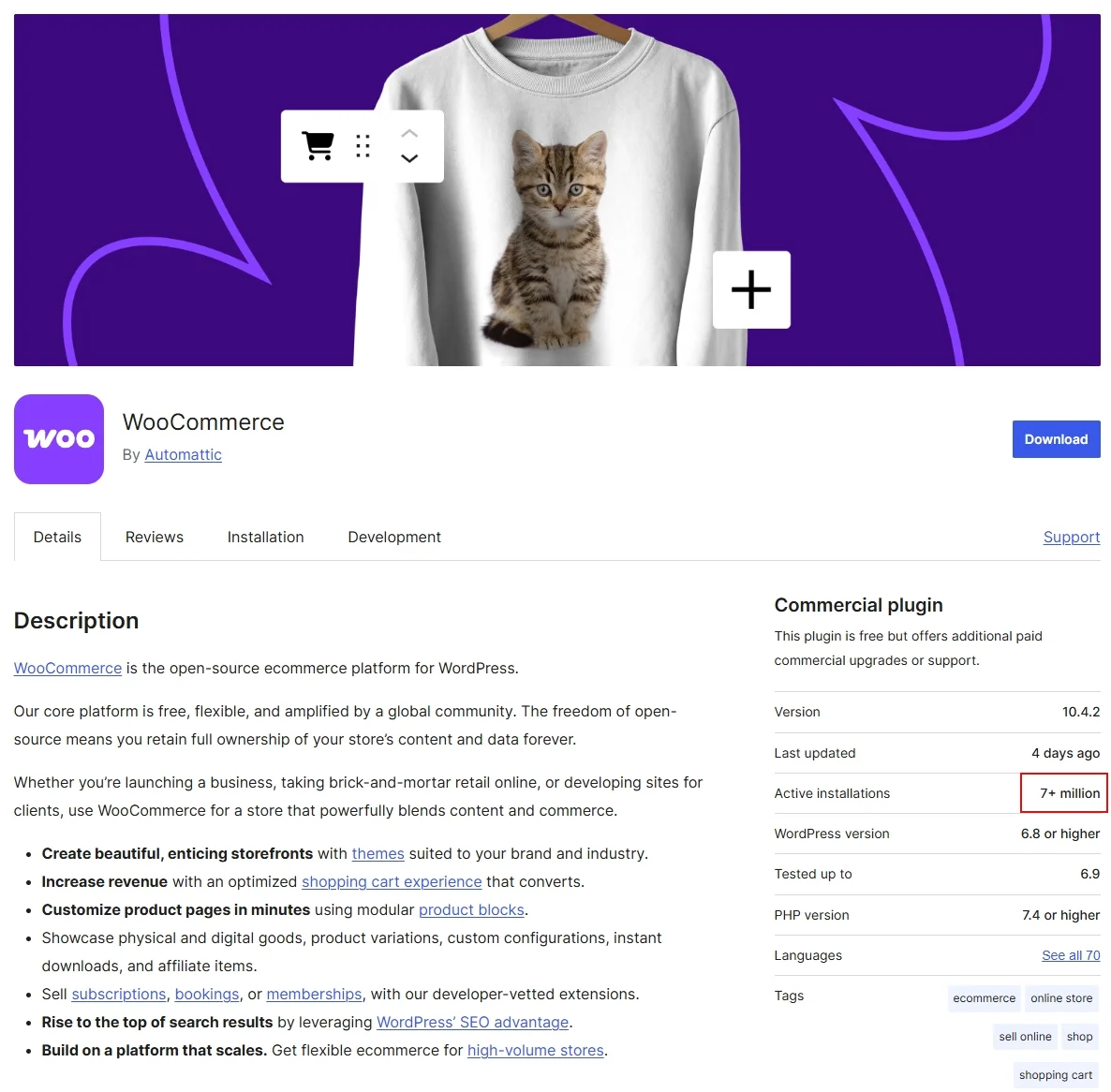
WooCommerce has 7+ million active installations and powers over 5 million live websites worldwide in 2025.
Official WordPress.org data
The most authoritative source is the WordPress plugin repository.
Active installations: 7+ million
https://wordpress.org/plugins/woocommerce/
This number represents WordPress.org’s own estimate of actively installed WooCommerce plugins. It is rounded and updated periodically, not in real time.
Independent website tracking platforms
BuiltWith estimates approximately 5.2 million live websites using WooCommerce
https://trends.builtwith.com/shop/WooCommerce
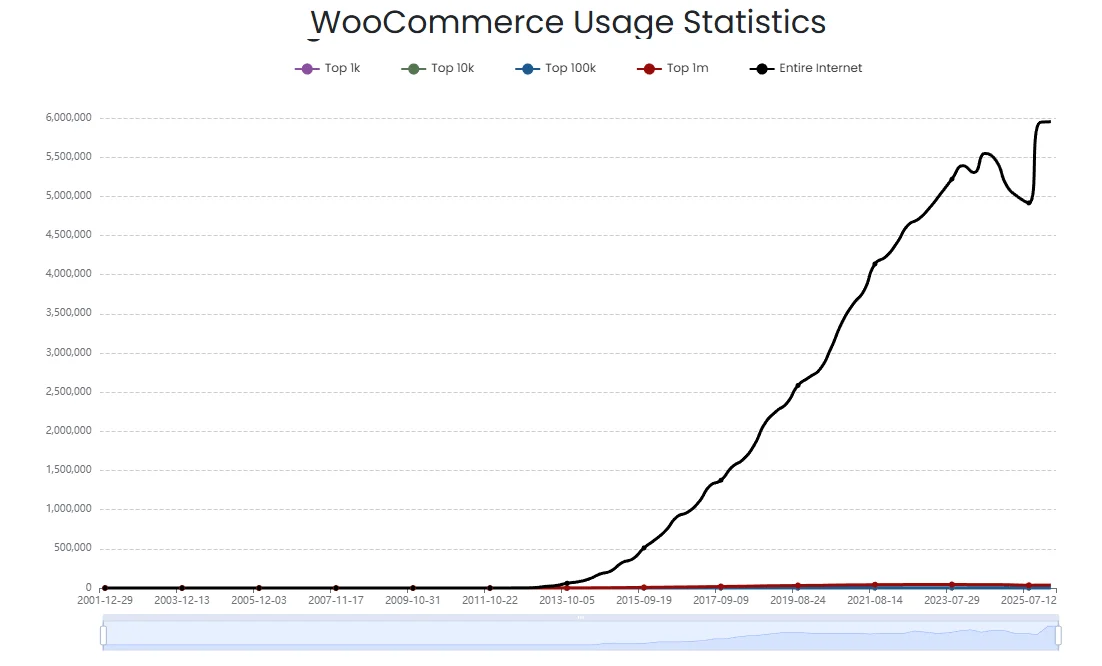
StoreLeads reports more than 4.6 million WooCommerce stores among the eCommerce websites they track
Store Leads APP
Why these numbers differ
WordPress.org tracks plugin installations
BuiltWith and StoreLeads track live, crawlable websites
Some installations are private, blocked, local, or inactive
Reliable conclusion
WooCommerce shows 7+ million active installations on WordPress.org and is used by over 5 million live websites worldwide in 2025.
What Percentage of Online Stores Use WooCommerce?
Summary
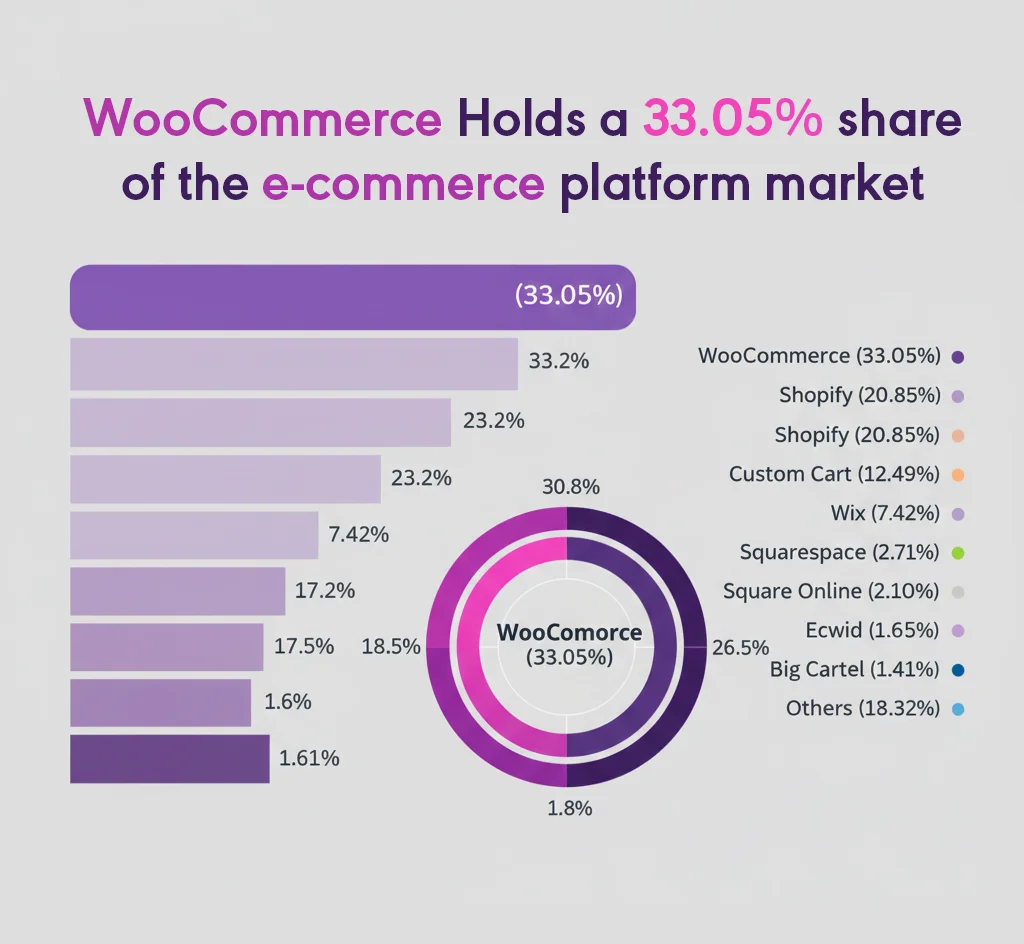
WooCommerce powers approximately 30–35% of all online stores globally, depending on how the data is measured.
Some datasets show WooCommerce at around 13–15% of the top one million eCommerce sites, while broader datasets that include small and mid-sized businesses show WooCommerce exceeding 30% market share.
WooCommerce performs especially well among niche stores, service-based businesses, and content-driven commerce websites.
WooCommerce Market Share Compared to Other Platforms
WooCommerce and Shopify remain the two most dominant eCommerce platforms worldwide.
WooCommerce leads in self-hosted flexibility, full data ownership, custom workflows, and integrations.
Shopify leads in fully hosted SaaS commerce and higher average revenue per store.
In 2025, WooCommerce continues to lead by total store count, while Shopify competes strongly in hosted commerce.
WooCommerce’s Dominance Inside WordPress
More than 90% of WordPress eCommerce websites use WooCommerce.
No other WordPress eCommerce plugin consistently appears in global platform rankings.
For WordPress-based stores, WooCommerce remains the default and expected solution.
How Many WooCommerce Themes Are Available?
As of early 2025:
WordPress.org lists 2,200+ WooCommerce-compatible themes
https://wordpress.org/themes/search/woocommerce/
ThemeForest lists 1,500+ WooCommerce themes
https://themeforest.net/category/wordpress/ecommerce/woocommerce
This brings the known total to 3,700+ WooCommerce themes, excluding independent theme vendors and agency-built solutions.
How Many WooCommerce Plugins Exist?
Estimating the total number of WooCommerce plugins is challenging because extensions are distributed across multiple platforms and independent developer websites.
Based on publicly visible data:
• The WordPress.org plugin directory lists over 1,000 plugins related to WooCommerce, based on current pagination results.
https://wordpress.org/plugins/search/woocommerce/
• The official WooCommerce marketplace offers 700+ extensions developed or curated for WooCommerce stores.
https://woocommerce.com/products/
• In addition to these, hundreds of WooCommerce plugins are sold independently by third-party developers through their own websites and private marketplaces.
Taken together, this makes WooCommerce one of the largest and most active plugin ecosystems in the WordPress platform.
How Fast Is WooCommerce Growing?
WooCommerce continues to show consistent long-term growth within the WordPress ecosystem.
While WordPress.org does not publicly disclose exact weekly or daily download figures, several indicators point to ongoing adoption. WooCommerce remains one of the most actively installed plugins on WordPress, with a steady increase in active installations over time.
In addition, independent technology trackers consistently report millions of live WooCommerce-powered websites, indicating that new stores continue to launch while existing stores remain active.
Retention is also strong. Once WooCommerce is installed, it is typically used as a long-term eCommerce foundation rather than a short-term solution, particularly for small and mid-sized businesses.
What to Expect from WooCommerce in 2026
Continued adoption
With WordPress powering over 60% of CMS-based websites, WooCommerce is positioned for steady growth in 2026.
More integrations and automation
Store owners increasingly connect WooCommerce with external tools for reporting, analytics, automation, and operations.
Performance and scalability improvements
Competition with hosted platforms is driving improvements in checkout speed, performance, and usability.
AI-assisted commerce
AI-driven personalization, automation, and analytics are expected to become more common in WooCommerce workflows throughout 2026.
WooCommerce Statistics FAQ
How many active WooCommerce installations are there?
WooCommerce currently shows 7+ million active installations on the WordPress.org plugin repository.
How many live websites use WooCommerce?
Independent tracking platforms estimate that over 5 million live websites actively use WooCommerce.
What percentage of online stores use WooCommerce?
WooCommerce powers approximately 30–35% of all online stores worldwide.
Is WooCommerce expected to grow in 2026?
Yes. Continued WordPress growth, increased integrations, and demand for flexibility are expected to drive adoption.
WooCommerce Statistics Infographic Outline
Section 1: By the Numbers
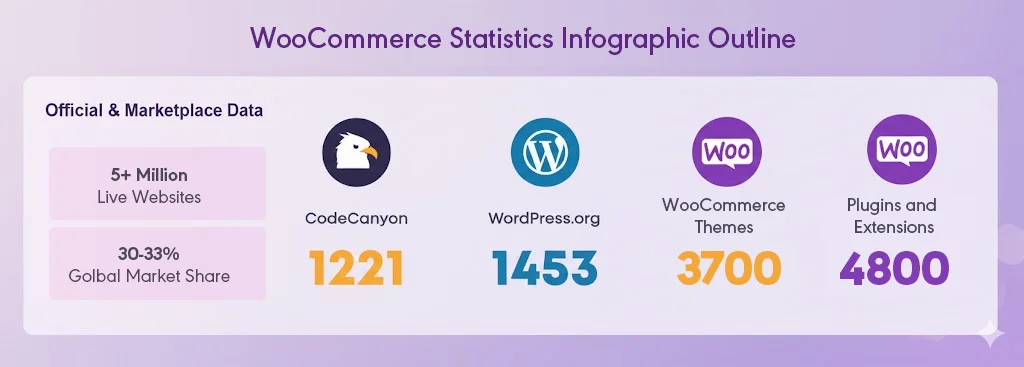
7+ million active installations
5+ million live websites
30–35% global market share
Section 2: Platform Comparison
WooCommerce vs Shopify store count
Self-hosted vs hosted commerce
Section 3: Ecosystem Size
3,700+ themes
4,800+ plugins and extensions
Section 4: Growth & Future
2M+ weekly downloads
2026 trends: integrations, performance, AI
Related Resources for WooCommerce Store Owners
WooCommerce data management
WooCommerce Google Sheets integration
WordPress to Google Sheets automation
Google Sheet Connector for WordPress
More WooCommerce insights
Final Thoughts
As of December 15, 2025, WooCommerce remains one of the most widely used eCommerce platforms in the world. With 7+ million active installations, millions of live stores, and a massive ecosystem of themes and plugins, it continues to define flexible, self-hosted commerce.
Heading into 2026, WooCommerce’s openness, extensibility, and strong integration ecosystem position it for continued growth.

 CF7 Google Sheet Connector
 WPForms Google Sheet Connector
 Ninja Forms Google Sheet Connector
 Gravity Forms Google Sheet Connector
 Formidable Forms Google Sheet Connector
 Forminator Forms Google Sheet Connector
 Fluent Forms Google Sheet Connector
 JetFormBuilder Google Sheet Connector
 Elementor Forms Google Sheet Connector
 Avada Forms Google Sheet Connector
 Divi Forms Google Sheet Connector
 WooCommerce Google Sheet Connector
 Easy Digital Downloads Google Sheet Connector
 WordPress Core Google Sheet Connector